

Reframing Clean Packaging Branding from Claims to Clarity

Clean packaging is entering a new phase. It’s moving from being centred on broad sustainability claims to a focus on simplicity, transparency, and measurable environmental impact. Across market sectors, brands are moving away from superficial “eco” messaging toward solutions that are functional, credible, and easy for consumers to navigate.
As a result, packaging has become a powerful ethical signal, with many European consumers defining an ethical brand by the sustainable packaging solutions it offers and thus highlighting how packaging increasingly acts as a first impression: What’s on the outside is now inseparable from perceptions of what’s inside.
Key Consumer Demands Shaping Clean Packaging
Although visual appeal continues to be the initial draw for consumers, purchase decisions are increasingly influenced by factors such as verifiable sustainability credentials, product longevity, and safety.
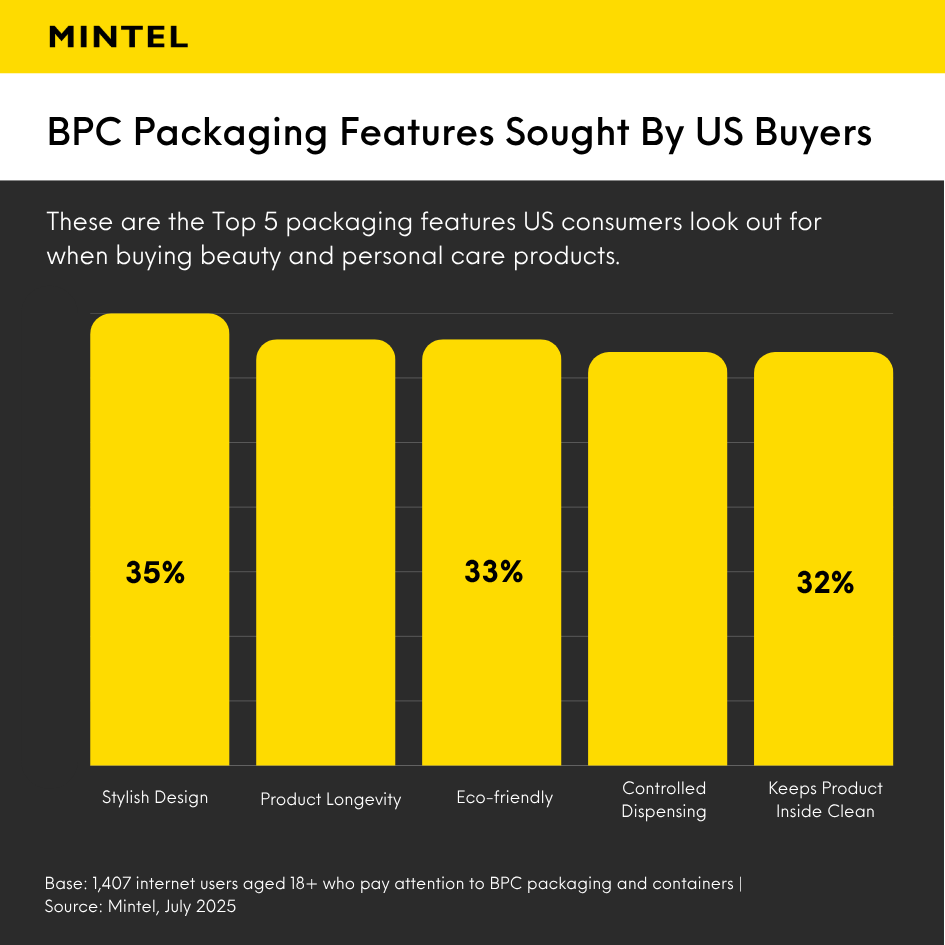
These evolving expectations are shaping four key pillars of clean packaging: Transparency, simplicity, functionality and hygiene, and health reassurance.
How brands are using transparency as a packaging differentiator
Consumer demand for transparency is reshaping how brands should approach product packaging, particularly sustainable packaging design. The era of broad, unsubstantiated “eco-friendly” or “recyclable” claims is ending, as these are no longer sufficient to convince shoppers.
Instead, consumers expect clear, verifiable proof from brands, as well as detailed, product-level impact metrics. For example, litres of water used or distance travelled. This reflects a broader shift from promises to proof, where transparent sourcing and measurable sustainability metrics are becoming essential.
Growing fatigue with greenwashing reinforces this shift. Over 70% of UK adults feel that brands often appear greener than they are and believe businesses should be held accountable for misleading sustainability claims. As a result, transparency is now a baseline expectation, with UK consumers wanting brands to be more open about environmental impact.
Consumers are also demanding the “whole truth” about packaging. For example, “recycle-ready” does not necessarily mean recyclable within current local infrastructure. Brands that clearly communicate these nuances, including both progress and limitations, are more likely to build trust.
Simple, standardised signals are gaining traction across markets, with environmental impact rating scales ranking as the most influential on-pack sustainability cue globally. Transparency also plays a broader role in building trust, from reducing backlash to shrinkflation to reinforcing product integrity through transparent food packaging and visible product cues.
However, proof alone is not enough — consumers also expect packaging to be easy to use and sustainability to be easy to act upon.
Use simplicity as a signal of trust and sustainability
Simplicity is becoming synonymous with “clean,” both in how packaging is designed and how it is communicated. Brands are increasingly prioritising minimalist packaging design, often using mono-materials to make recycling and reuse easier. This approach reduces unnecessary complexity while also signalling transparency and “clean” ingredients to consumers.
Many shoppers are actively choosing products with less or plainer packaging, reinforcing a trend Mintel has already identified as the appeal of minimalist beauty packaging and streamlined formats across categories. Simplicity in both design and material choice is increasingly valued as a sign of honesty and environmental responsibility.
Beyond clarity, however, packaging must also perform effectively in everyday use.
Functionality and hygiene: Make sustainability work in practice
Clean packaging must extend its meaning beyond being eco-friendly; it must also meet consumer expectations for convenience, hygiene, and product protection. Features such as resealability, mess-free dispensing, and maintaining product longevity are prioritised alongside environmental benefits.
This extends beyond messaging into real-world usability. Clean label packaging must reduce effort for product users, whether through
- intuitive recyclable packaging design,
- clear disposal instructions,
- or take-back schemes that minimise confusion.
The goal is to eliminate “wishcycling” and reduce the mental load associated with making sustainable choices.
Hygiene and functionality remain particularly important in categories such as beauty and personal care, where packaging must balance sustainability with product integrity and user experience, especially amid cost pressures and growing fatigue with sustainability messaging.
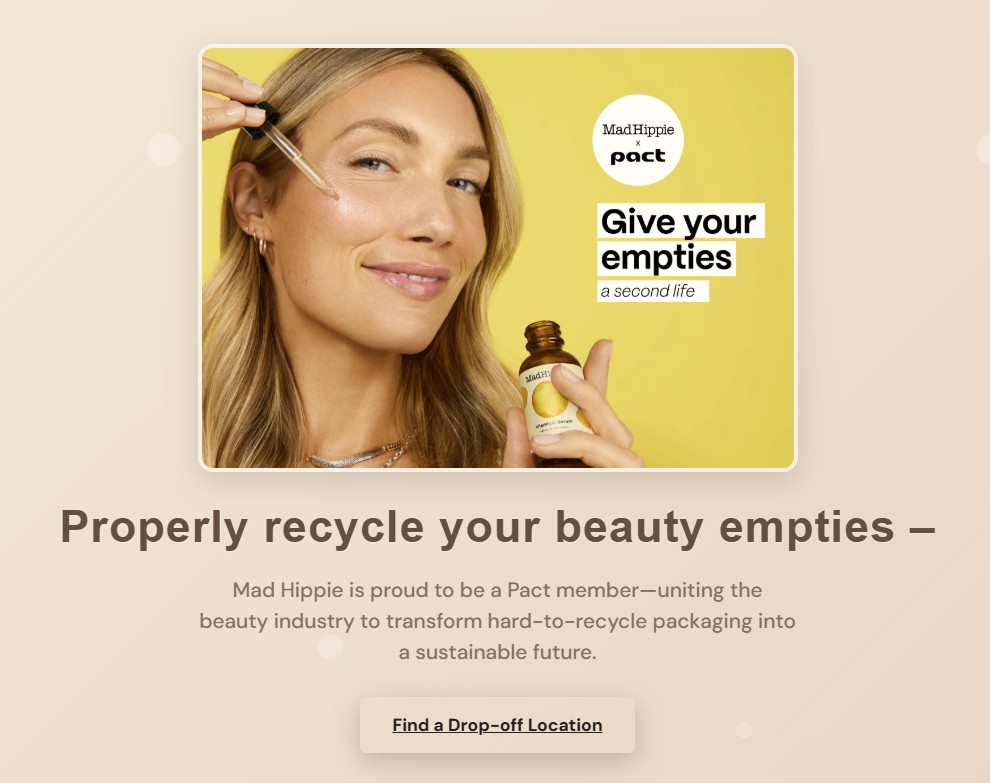
For example, MadHippie and Eva NYC have partnered with Pact Collective to educate product users on hard-to-recycle components and offer free shipping labels to return these materials. This reduces both the mental and logistical burden on consumers, making participation in sustainable packaging solutions more accessible.
Even when packaging is functional and sustainable, concerns around material safety continue to shape consumer perceptions.
Health reassurance strengthens clean packaging claims
Health and sustainability are increasingly intertwined within clean label packaging. Packaging, no longer seen purely as a container, but as a key factor influencing perceptions of product safety and wellbeing.
In the US, concerns around microplastics and “forever chemicals” are driving this shift, with almost 70% of consumers worried about packaging materials affecting food safety. Consumers also explicitly link packaging to environmental responsibility, making health-protective messaging and material transparency more compelling.
This creates an opportunity for brands to integrate health reassurance into sustainable packaging design — from clearly communicating material choices to reinforcing product protection and freshness. Clean packaging must not only minimise environmental impact, but also actively signal safety and trust.
For example, Finland-based food packaging company Huhtamaki has introduced ice cream cups that are home and industrially compostable, as well as recyclable. By replacing traditional plastic packaging with molded fibre solutions, the brand appeals to eco-conscious consumers while maintaining product quality, safety and functionality.


From Demand to Action: How Your Brand Can Respond to Shifting Packaging Trends
Building on evolving consumer expectations around transparency, simplicity, and functionality, brands are now under pressure to translate these demands into tangible packaging solutions. This requires not only rethinking materials and design but also enabling consumers to engage more easily with sustainable systems.
Material innovation and reduction: Designing for simplicity and transparency
One of the most visible shifts in clean and sustainable packaging solutions is the move toward reduction. Brands are prioritising minimalist packaging design, not only when it comes to aesthetics, but also materiality, often using mono-materials that simplify recycling and signal transparency.
This approach focuses on using less material overall while eliminating unnecessary complexity, reinforcing both environmental responsibility and clearer communication of “clean” ingredients.
Consumer perceptions of sustainability vary by material, with plastic consistently regarded as the least eco-friendly option.
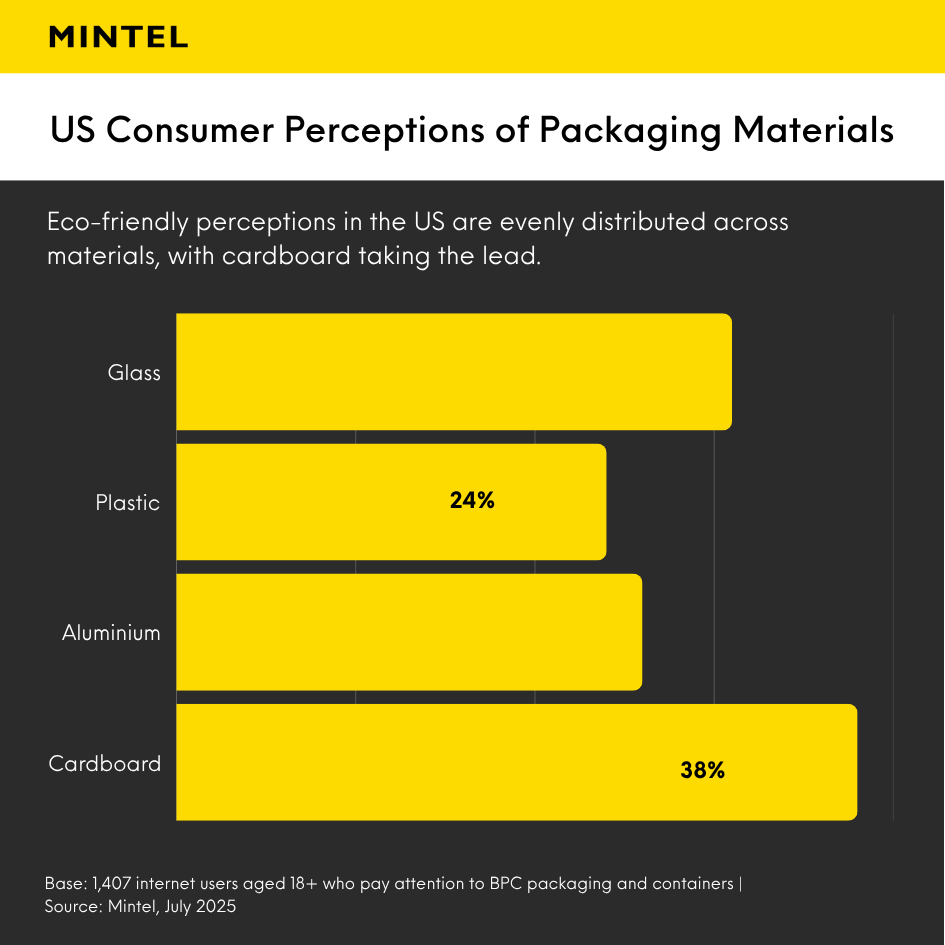
At the same time, material innovation continues to evolve. While plastic remains prevalent, there is a growing shift toward bio-based, biodegradable, and post-consumer recycled materials. However, no single material dominates consumer perceptions of eco-friendliness, reinforcing the need for brands to guide understanding.
In some markets, innovation is also taking transparency more literally. In China, for example, consumers prioritise semi-transparent and transparent packaging for household cleaners, with visibility acting as a cue for both product integrity and trust.
Regional differences further highlight the uneven pace of adoption. Eco-friendly packaging claims remain lower in parts of North APAC compared to the UK and US, while in South Korea, 63% of consumers expect brands to take the lead on environmental issues (Mintel Client Access Only).
However, innovation alone is not enough. Consumers also need clearer guidance to understand the real impact of different packaging choices.
Educating consumers on material trade-offs and end-of-life realities
Despite strong support for reducing plastic use, understanding of material trade-offs remains limited. Many consumers are unaware that, in some cases, plastic may have a lower environmental footprint than alternatives such as paper.
This knowledge gap highlights a growing need for education alongside innovation. Brands must provide clearer context around material choices, helping consumers navigate complex sustainability trade-offs and make more informed decisions.
Less plastic remains a strong consumer expectation, with 74% of US consumers agreeing that companies should limit its use. However, expectations around end-of-life outcomes are evolving. For example, over half of US consumers would prefer packaging that decomposes faster, even if it is not recyclable, signalling demand for credible alternatives beyond recycling.
Increasingly, proof is replacing promises. Brands that quantify their environmental impact, such as demonstrating material savings or waste reduction clearly and transparently, are better positioned to build trust.
Tap into consumer demand for transparency, by including them in the process
Although refill and reuse models still remain relatively niche in 2026, they represent key opportunities in the clean packaging landscape. As trust in recycling systems weakens, consumers are looking for more tangible and participatory solutions.
Clean packaging is therefore evolving from a one-way system into a collaborative model. Brands are expected to actively involve consumers through refill schemes, return programmes, and visible circular systems, marking a shift from passive sustainability to shared responsibility.
“Low-effort” recycling plays a critical role in enabling this shift. Brands are encouraged to combat “wishcycling” and reduce consumers’ mental load through education, clear instructions and take-back solutions that simplify participation.
Convenience remains central to adoption. Consumers are most interested in packaging features that increase usability and trust, including transparent windows, freshness-monitoring labels, bulk formats, and portion control, alongside digital tools such as QR codes for additional information.
However, adoption ultimately depends on practicality. Functionality remains essential, particularly in categories like beauty and personal care, where packaging must deliver on hygiene, product longevity, and ease of use. Features like resealability, mess-free dispensing, and durable formats support both sustainability and convenience ensuring that circular solutions fit seamlessly into everyday routines.
Lead the Future of Clean Packaging with Mintel
Clean packaging is converging around three core principles:
- Transparency
- Simplicity
- Health reassurance
Clean packaging in 2026 and beyond is defined by less material, more honesty, and practical impact. It is no longer enough for packaging to be recyclable in theory, it must be understandable and actionable.
Across global markets in the food and drink, beauty and personal care, and household sectors, consumers are seeking clearer proof, easier end-of-life decisions, and stronger safety cues. While claims like “environmentally friendly packaging” and “recycling” remain strong, the future lies in moving beyond rhetoric. By 2030, the focus will shift further toward verifiable action, with greater emphasis on reuse systems and deeper collaboration between brands and consumers — this is the gap that forward-looking businesses will be looking to fill over the next five years.
Sign up for free to Mintel Spotlight for the latest articles and thought leadership pieces for fresh insights from industry experts. Or browse Mintel Store for all our Packaging Market Research.
24World Media does not take any responsibility of the information you see on this page. The content this page contains is from independent third-party content provider. If you have any concerns regarding the content, please free to write us here: contact@24worldmedia.com