

RFID Technology Market: Transforming Supply Chain Visibility and Automation

The RFID market is expected to grow from USD 14.58 billion in 2025 to USD 30.47 billion by 2034, at a CAGR of 8.5%. Key drivers for the RFID market include the growing need for real-time visibility, accurate data capture, and operational efficiency across supply chains and enterprise operations. RFID solutions, including tags, readers, antennas, and software platforms, enable automated identification and tracking of assets and inventory. Rising adoption of item-level tagging, warehouse automation, and omnichannel retail is accelerating deployment. Increasing use of RFID in healthcare and manufacturing supports asset utilization, compliance, and workflow optimization. Advancements in UHF RFID performance, tag miniaturization, and reader sensitivity improve reliability in complex environments. In addition, integration of RFID with IoT platforms, cloud analytics, and AI-driven insights is strengthening market growth and expanding advanced deployment scenarios.
Download PDF Brochure @ https://www.marketsandmarkets.com/pdfdownloadNew.asp?id=446
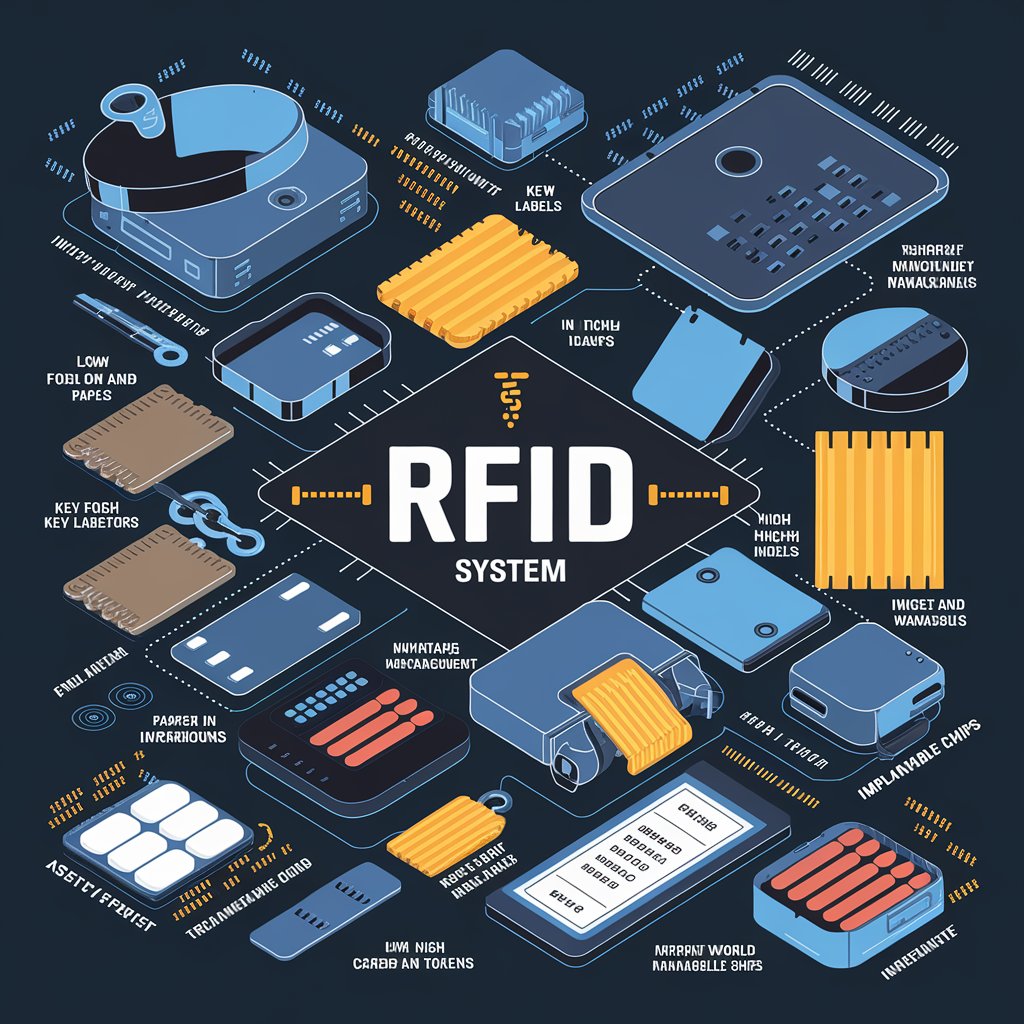
By offering, the tags segment is expected to register the highest CAGR in the RFID market during the forecast period.
The RFID tags segment is projected to witness the fastest growth, driven by expanding deployment volumes across retail, transportation, logistics & warehousing, industrial & manufacturing, medical, healthcare & pharmaceutical, and animal tracking industries. Rising adoption of item-level tagging in retail is a primary growth driver, as enterprises seek higher inventory accuracy, faster stock reconciliation, and improved omnichannel fulfillment. Logistics and warehouse operators are increasing tag usage to support real-time asset tracking, shipment visibility, and process automation. Growth is further supported by declining tag costs, improved manufacturing yields, and large-scale sourcing by global retailers and brand owners. Advancements in UHF RFID inlays, antenna design, and chip sensitivity are improving read performance in dense and high-speed environments. The increasing use of specialized tags, including sensor-enabled, on-metal, and rugged tags, is expanding adoption in inventory & asset management, security & access control, contactless payments, and ticketing applications. In addition, regulatory requirements for traceability and product authentication are accelerating tag demand in pharmaceuticals, food, and government programs. As RFID deployments scale from pilots to enterprise-wide rollouts, the tags segment continues to drive volume growth and market expansion.
Based on end use, the retail segment is estimated to account for the largest market share in 2034.
Retail represents the largest end use segment for RFID adoption due to sustained investment in item-level tagging, inventory visibility, and omnichannel operations. Large apparel, footwear, and general merchandise retailers deploy RFID to improve stock accuracy, reduce shrinkage, and support real-time inventory management across stores and distribution centers. RFID enables faster cycle counts, improved shelf availability, and more accurate order fulfillment for online and in-store channels. The segment benefits from the large-scale rollout of UHF RFID tags, fixed readers, handheld readers, and RFID-enabled software platforms. Integration of RFID data with enterprise resource planning, warehouse management, and analytics systems enhances demand forecasting and replenishment decisions. Retailers also use RFID to support loss prevention, returns management, and store-level process automation. Declining tag costs and standardized global UHF protocols support broader adoption beyond apparel into grocery, electronics, and specialty retail. In addition, RFID supports emerging retail requirements such as checkout-free stores, smart fitting rooms, and personalized shopping experiences. These factors collectively reinforce retail’s leading share within the RFID market.
By region, Asia Pacific is expected to account for the largest market share from 2025 to 2034.
Asia Pacific represents the largest RFID market due to its strong manufacturing base, large retail footprint, and expanding logistics and supply chain networks. Countries such as China, Japan, South Korea, and India are witnessing rising adoption of RFID across retail, industrial & manufacturing, automotive, medical, healthcare & pharmaceutical, and transportation, logistics & warehousing sectors. High-volume production of consumer goods and electronics supports large-scale deployment of RFID tags, inlays, and readers. The region benefits from the presence of major RFID component manufacturers, tag converters, and system integrators, enabling cost-effective and scalable deployments. Retailers in Asia Pacific increasingly adopt item-level tagging to improve inventory accuracy and support omnichannel fulfillment. Logistics providers use RFID for warehouse automation, shipment tracking, and asset visibility. Government initiatives promoting digitalization, smart manufacturing, and supply chain transparency further support adoption. Growing use of RFID in healthcare, food safety, and public transportation also contributes to market expansion. Combined with declining tag costs and improving infrastructure, these factors position Asia Pacific as the leading regional contributor to the global RFID market.
The report profiles key players such as Zebra Technologies Corp. (US), Honeywell International Inc. (US), Avery Dennison Corporation (US), HID Global Corporation (US), Datalogic S.p.A. (Italy), Impinj, Inc. (US), Alien Technology, LLC (US), CAEN RFID S.r.l. (Italy), GAO RFID Inc. (Canada), and Xemelgo, Inc. (US). These companies pursue product launches, expansions, partnerships, and acquisitions to strengthen their RFID capabilities.
For more info: https://www.marketsandmarkets.com/Market-Reports/rfid-market-446.html
24World Media does not take any responsibility of the information you see on this page. The content this page contains is from independent third-party content provider. If you have any concerns regarding the content, please free to write us here: contact@24worldmedia.com