

Waste Management Market – Rising demand for waste management services from emerging economies due to rapid industrialization
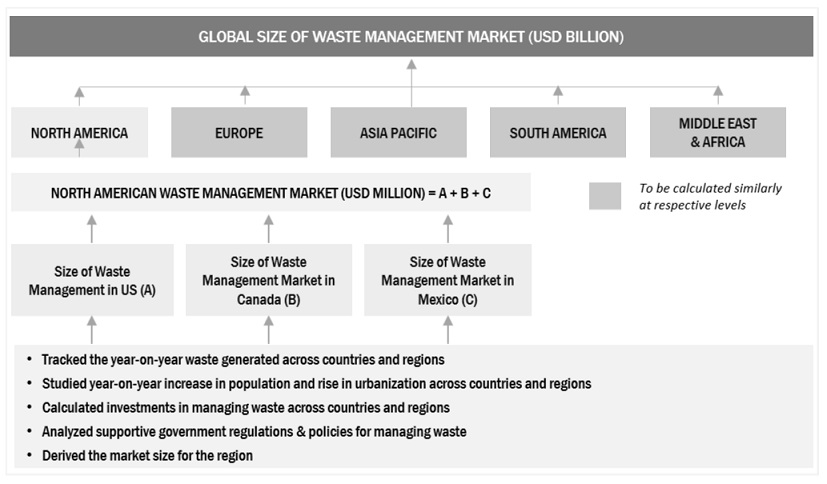
Global Waste Management Market Scenario:
The global waste management market
size is projected to reach USD 542.7 billion by 2026 from an estimated
value of USD 423.4 billion in 2021, growing at a CAGR of 5.1%. Stringent
regulations of governments worldwide for better management of waste and
initiate environmental protection; strong focus of several governments
to conduct awareness programs showcasing importance of waste segregation
and waste management; technological advances and shortened life cycle
of electronic products help in increasing e-waste are the key factors
driving the waste management market.
Key Market Players
Waste Management (US), Veolia (France), Republic
Services (US), SUEZ (France), and Waste Connections (US) are the leading
players in the waste management market. Biffa (England), Clean Harbors
(US), Covanta Holding (US), Daiseki (Japan), Hitachi Zosen (Japan),
and other players operating in the market are the leading players in the
global waste management market.
Download PDF Brochure – https://www.marketsandmarkets.com/pdfdownloadNew.asp?id=72285482
The e-waste segment by waste type is estimated to be the largest market for waste management, from 2021 to 2026. The growth of the wired segment is driven by the rapid urbanization, transforming urban mobility, and increased need to reduce carbon emissions. The market for the e-waste segment in Asia Pacific is expected to grow at the highest CAGR during the forecast period. E-waste includes electrically powered component waste. They include appliances such as computers, consumer electronics, and refrigerators. E-waste is a mixture of useful and hazardous materials that demand careful handling and recycling of materials. Thus, e-waste management has gained importance globally to secure the environment from the adverse effects of the materials such as lead and plastics.
Based on service type, the recycling segment is expected to grow at
the fastest CAGR from 2021 to 2026. The growth of this segment is driven
owing to high essentiality to reduce greenhouse gas emission.
Recycling, recovery, and reprocessing of waste materials are useful to
produce new products. The basic phases in recycling are the collection
of waste materials, their processing into new products, and purchasing
of those products, which may then themselves be recycled. Typical
materials that can be recycled are iron and steel scraps, aluminum cans,
glass bottles, paper, wood, and plastics. The materials reused in
recycling serve as substitutes for raw materials obtained from such
increasingly scarce natural resources as petroleum, natural gas, coal,
mineral ores, and trees. Recycling can help reduce the quantities of
solid waste deposited in landfills, which has become increasingly
expensive. Recycling also reduces the pollution of air, water, and land,
resulting from waste disposal. Recycling helps reduce energy usage,
decrease the amount of new/fresh raw materials, and minimize greenhouse
gas emissions.
Speak to Analyst – https://www.marketsandmarkets.com/speaktoanalystNew.asp?id=72285482
The residential segment is estimated to account
for the largest share of the waste management market in 2020, and this trend is
expected to continue during the forecast period. Ever-increasing population and
significant solid waste generation to drive demand for waste management
services from residential segment. Waste generated from residential end users
can be used for generating energy through waste-to-energy plants by burning
solid waste to produce steam in a boiler and can also be is used to generate
electricity.
The waste management market has been segmented, by region, into North
America, Europe, Asia Pacific, the Middle East & Africa, and South
America. The Asia Pacific region is projected to grow at the fastest
rate, from 2021 to 2026, followed by Europe. The region has been
segmented, by country, into China, Japan, India, Australia, South Korea,
and Rest of Asia Pacific. Rest of Asia Pacific mainly includes
Singapore, Malaysia, Thailand, and Indonesia. The population growth in
the region, the high disposable income of the people, and the increased
demand for packaged food products are among a few major factors that
drive the growth of waste management in the region. Asia Pacific is also
a key contributor to marine plastic pollution. The materials involved
include plastic bottles, plastic bags, single-use plastic items, and
plastic packaging, among others. Key countries responsible for this kind
of pollution include China, Indonesia, and Thailand.
Request Sample Pages –https://www.marketsandmarkets.com/requestsampleNew.asp?id=72285482
In addition, the rise in
well-being and prosperity of urban residents is linked closely to increased
consumption and production patterns with consequences for waste streams.
Increased municipal solid waste is particularly noticeable in low- and
middle-income countries. In these countries, the rate of waste generation has
risen quickly and is expected to accelerate over the next decade and beyond. According
to the United Nations’ Economic and Social Commission for Asia and the Pacific
(UNESCAP), between 50% and 65% of municipal solid waste in low- and
middle-income countries is organic and can be turned into high-quality compost
for use in agriculture, gardening, or landscaping or converted to biogas to
produce heat and electricity. There are also significant opportunities for
recycling inorganic materials, such as glass, plastic, and metal. Moreover, the
manufacturing of new glass‐based materials also has an
ultimate opportunity for open‐loop recycling and has more environmental
benefits than that of landfilling. Between 25 and 35% of municipal solid waste
is recyclable inorganic waste; this proportion will increase over the coming
decades with further development of countries, leading to rising demand for
waste management.
24World Media does not take any responsibility of the information you see on this page. The content this page contains is from independent third-party content provider. If you have any concerns regarding the content, please free to write us here: contact@24worldmedia.com