

What Europe’s heat wave means for the power grid
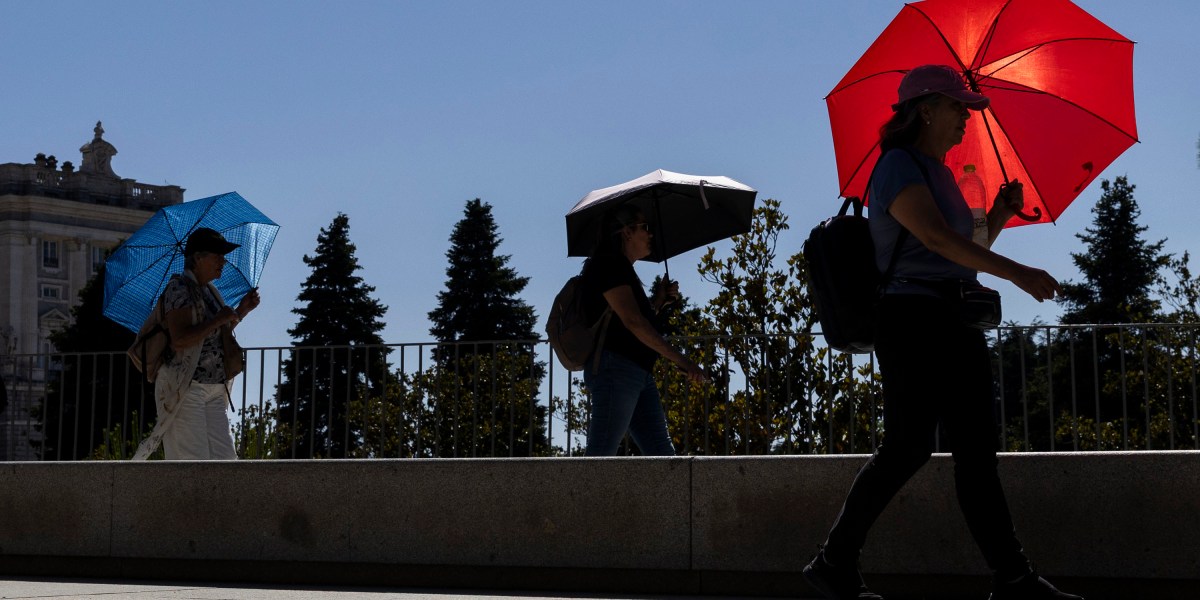
Climate change is squeezing the grid from all sides, affecting both supply and demand. Heat can affect power availability, from generation to transmission infrastructure, as I covered in my latest story. But climate change is also helping push electricity use higher—and countries in Europe and around the world will need to adapt.
In the US, nearly 90% of homes have air-conditioning. That means many grids see their highest demand in the summer months, and the risk of brownouts and blackouts is at its worst.
People are often quick to cast air-conditioning as a villain, and it’s true that the technology will account for a major chunk of the globe’s rising energy demand in the future. But the reality is that heat waves can be incredibly dangerous, and as climate change pushes temperatures higher, that risk is becoming more real in parts of the world that haven’t historically had to worry quite so much about heat.
In Europe, air-conditioning is historically much less common, with about 20% of homes across the continent using it. Some countries, including those getting hit by this heat wave, have even lower rates—the UK comes in at about 5%, and Germany is around 3%.
But those numbers are starting to tick up as people adapt to increasingly brutal summers. As they do, we should expect higher electricity demand, and stress for the grid—just as in the US. And utilities often have to look across borders to buy more power, driving prices up for everyone.
24World Media does not take any responsibility of the information you see on this page. The content this page contains is from independent third-party content provider. If you have any concerns regarding the content, please free to write us here: contact@24worldmedia.com