

AI, Robotics and Digital Inspection Driving Innovation
Jul 10th, 2026 · Comments Off on NDT and Inspection Market Growth: AI, Robotics and Digital Inspection Driving Innovation
The global Non-Destructive Testing (NDT) and inspection market is experiencing significant growth as industries increasingly prioritize safety, reliability, asset performance, and operational efficiency. NDT technologies enable organizations to evaluate the integrity of materials, components, and infrastructure without causing damage, making them essential across industries such as aerospace, automotive, oil & gas, power generation, manufacturing, construction, and transportation.
With the rise of Industry 4.0, artificial intelligence (AI), robotics, automation, and digital inspection technologies are transforming traditional inspection methods. Companies are adopting advanced NDT solutions to improve accuracy, reduce downtime, enhance predictive maintenance capabilities, and meet increasingly strict safety and regulatory requirements.
The integration of AI-powered analytics, robotic inspection systems, digital twins, and cloud-based monitoring platforms is creating new opportunities for market expansion. As industries move toward smarter and more connected operations, NDT and inspection technologies are becoming a critical part of modern asset management strategies.
Understanding NDT and Inspection Technologies
Non-Destructive Testing refers to a group of techniques used to inspect and evaluate materials, structures, and components without affecting their future usability. These methods help identify defects, cracks, corrosion, wear, and other potential failures before they become major operational risks.
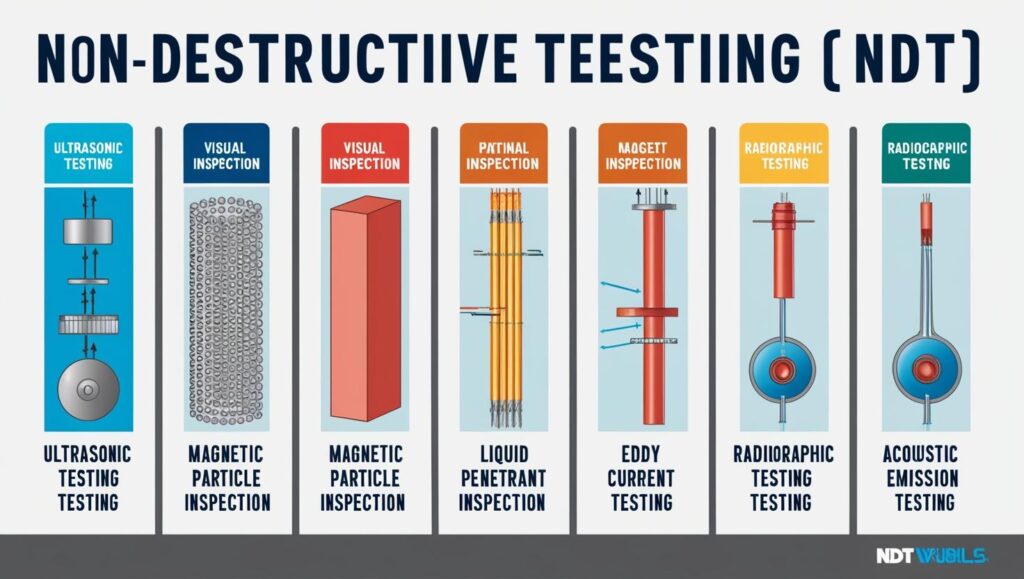
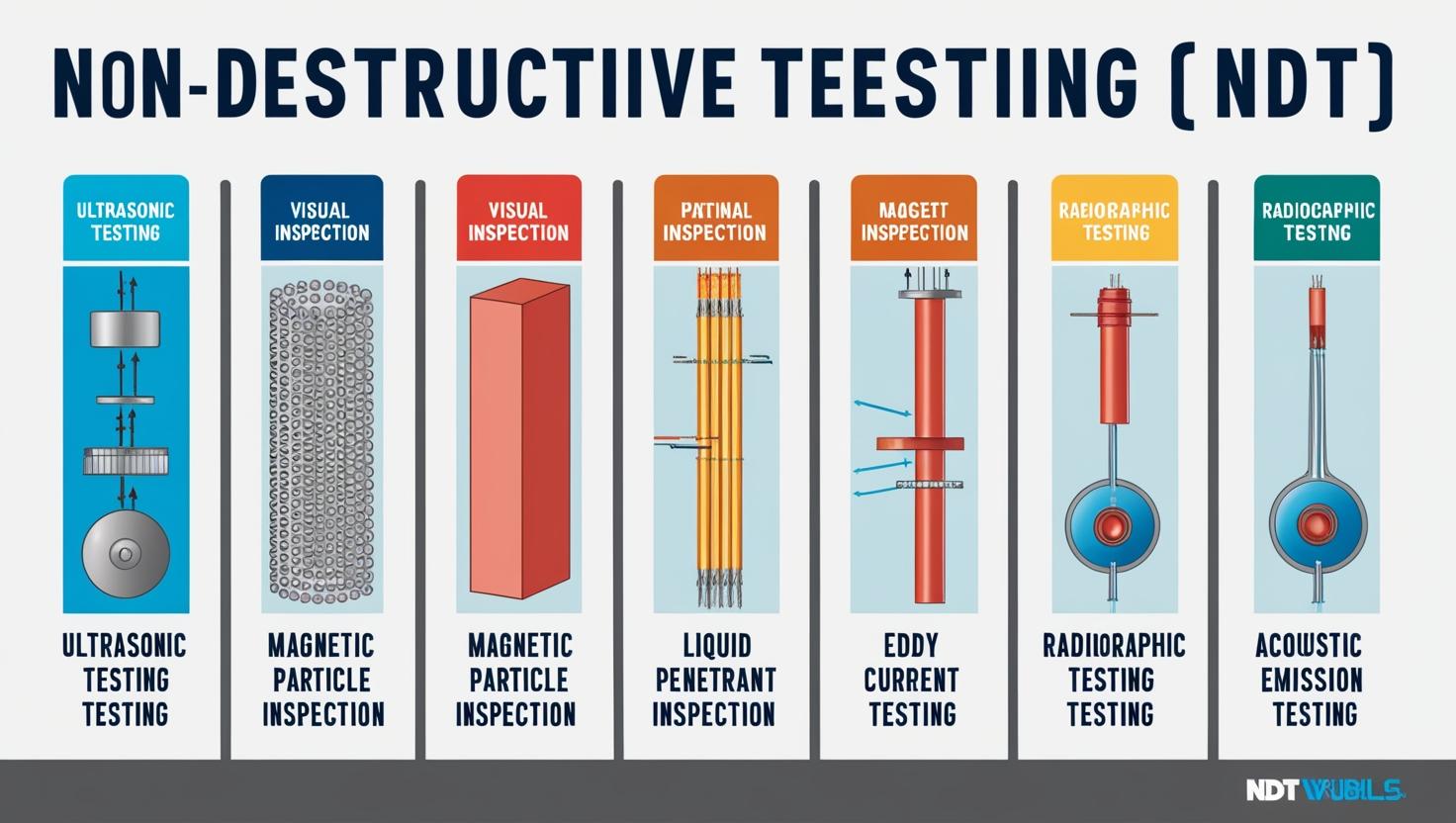
Common NDT techniques include:
- Ultrasonic Testing (UT)
- Radiographic Testing (RT)
- Magnetic Particle Testing (MT)
- Liquid Penetrant Testing (PT)
- Eddy Current Testing (ET)
- Visual Inspection
- Acoustic Emission Testing
- Infrared Thermography
NDT solutions are widely used to maintain safety standards, extend asset lifecycles, and minimize unexpected failures in critical industrial environments.
Market Overview
The NDT and inspection market is expanding due to increasing industrial automation, aging infrastructure, growing safety regulations, and rising demand for predictive maintenance solutions.
Industries are shifting from traditional periodic inspection approaches toward condition-based monitoring and real-time asset health assessment. This transition is accelerating the adoption of advanced inspection technologies powered by AI, machine learning, robotics, and data analytics.
Key factors supporting market growth include:
- Increasing infrastructure development
- Growing industrial safety requirements
- Rising demand for quality control
- Expansion of renewable energy projects
- Adoption of smart manufacturing practices
- Need to reduce operational downtime
Key Drivers of NDT and Inspection Market Growth
1. Increasing Focus on Industrial Safety and Asset Reliability
Safety remains one of the primary drivers of NDT adoption. Industrial failures involving pipelines, aircraft components, power equipment, and manufacturing systems can result in significant financial losses, environmental damage, and safety risks.
NDT technologies help organizations:
- Detect defects early
- Prevent equipment failures
- Improve operational reliability
- Reduce maintenance costs
- Extend asset lifespan
As industries operate increasingly complex systems, reliable inspection solutions are becoming essential.
2. Growing Adoption of Predictive Maintenance
Predictive maintenance is replacing traditional reactive maintenance strategies. Organizations are using inspection data and advanced analytics to predict equipment failures before they occur.
NDT technologies support predictive maintenance by monitoring:
- Structural integrity
- Material degradation
- Corrosion levels
- Mechanical performance
- Equipment conditions
This approach reduces downtime and improves operational efficiency across industrial sectors.
Download PDF Brochure @ https://www.marketsandmarkets.com/pdfdownloadNew.asp?id=882
3. Rising Demand for Automation and Digital Inspection
Digital transformation is reshaping the inspection industry. Companies are integrating sensors, connected devices, cloud platforms, and analytics tools into inspection workflows.
Digital inspection solutions provide:
- Real-time data collection
- Automated reporting
- Remote monitoring
- Improved documentation
- Faster decision-making
These capabilities are helping organizations move toward smarter asset management.
Artificial intelligence is becoming a major innovation driver in the NDT market by improving defect detection, data interpretation, and inspection accuracy.
AI-Based Defect Detection
AI algorithms can analyze large volumes of inspection data, including images, scans, and sensor readings, to identify defects with greater speed and accuracy.
Applications include:
- Automated image analysis
- Crack detection
- Corrosion identification
- Pattern recognition
- Quality assessment
Machine learning models continuously improve as they process more inspection data.
Improved Decision-Making
AI-powered inspection platforms help engineers make faster decisions by identifying potential risks and prioritizing maintenance activities.
Benefits include:
- Reduced inspection time
- Lower human error
- Improved accuracy
- Enhanced safety
Integration with Digital Twins
Digital twins create virtual representations of physical assets using real-time operational data.
When combined with AI and NDT technologies, digital twins enable:
- Continuous asset monitoring
- Failure prediction
- Performance optimization
- Lifecycle management
This integration is becoming increasingly valuable in complex industrial environments.
Robotics is transforming NDT by enabling inspections in hazardous, inaccessible, or difficult-to-reach environments.
Robotic Inspection Systems
Robotic platforms are being deployed for:
- Pipeline inspection
- Tank inspection
- Aircraft inspection
- Underwater inspection
- Power plant monitoring
- Infrastructure assessment
Robots improve safety by reducing the need for human workers to enter dangerous areas.
Drones and Autonomous Inspection
Unmanned aerial vehicles (UAVs) equipped with cameras and sensors are increasingly used for industrial inspections.
Drone-based inspection offers:
- Faster data collection
- Reduced inspection costs
- Improved accessibility
- Enhanced worker safety
Applications include:
- Wind turbine inspection
- Bridges
- Transmission lines
- Industrial facilities
- Oil & gas infrastructure
Automated Scanning Systems
Automated inspection systems improve consistency by performing repeatable inspections with high precision.
These systems are particularly valuable in:
- Automotive manufacturing
- Aerospace production
- Semiconductor industries
- Heavy machinery manufacturing
Cloud-Based Inspection Platforms
Cloud technologies enable centralized storage and analysis of inspection data.
Advantages include:
- Remote collaboration
- Real-time access
- Scalable data management
- Improved reporting
Internet of Things (IoT) Integration
IoT-enabled sensors allow continuous monitoring of equipment conditions.
Industrial IoT applications support:
- Remote diagnostics
- Real-time alerts
- Condition monitoring
- Automated maintenance scheduling
Advanced Imaging Technologies
Modern inspection systems use advanced imaging techniques to improve defect detection.
Innovations include:
- High-resolution imaging
- 3D scanning
- Thermal imaging
- Digital radiography
- Laser-based inspection
Aerospace and Defense
The aerospace industry relies heavily on NDT to ensure aircraft safety and compliance.
Applications include:
- Aircraft component inspection
- Engine testing
- Composite material analysis
- Structural integrity assessment
Oil and Gas
Oil and gas companies use NDT for pipeline, refinery, and offshore platform monitoring.
Inspection helps prevent:
- Corrosion failures
- Pipeline leaks
- Equipment breakdowns
Automotive
Automotive manufacturers use automated inspection solutions for:
- Weld inspection
- Component testing
- Quality assurance
- Manufacturing optimization
Power Generation
Power plants require continuous inspection of critical equipment such as:
- Turbines
- Boilers
- Generators
- Pressure vessels
NDT helps improve reliability and operational safety.
Renewable Energy
Growing renewable energy deployment is creating new inspection opportunities.
Applications include:
- Wind turbine blade inspection
- Solar infrastructure monitoring
- Battery system evaluation
High Initial Investment
Advanced NDT systems involving robotics, AI, and automation require significant investment in equipment and technology infrastructure.
Skilled Workforce Requirements
Operating advanced inspection technologies requires professionals with specialized knowledge in:
- Materials science
- Engineering
- Data analytics
- Automation systems
Data Management Challenges
AI-based inspection requires large volumes of high-quality data. Managing, storing, and securing inspection data remains a challenge for many organizations.
Regulatory Complexity
Different industries and regions have varying inspection standards and certification requirements, creating challenges for global implementation.
AI-Powered Autonomous Inspection
Future inspection systems are expected to become increasingly autonomous, using AI to plan inspections, analyze results, and recommend maintenance actions.
Growth of Smart Manufacturing
The expansion of Industry 4.0 will increase demand for integrated inspection solutions within automated production environments.
Expansion of Remote Inspection Services
Remote inspection technologies will continue growing as industries seek safer and more efficient methods for monitoring critical assets.
Sustainability and Green Infrastructure
As industries focus on sustainability, NDT will support longer asset lifecycles, reduced material waste, and efficient resource utilization.
- The NDT and inspection market is growing due to increasing industrial safety requirements.
- AI is improving defect detection, analysis, and inspection accuracy.
- Robotics enables safer inspections in hazardous and inaccessible environments.
- Digital inspection solutions are replacing traditional manual processes.
- Predictive maintenance is driving demand for advanced NDT technologies.
- Aerospace, oil & gas, automotive, and power industries remain major users.
- IoT and cloud platforms are enabling real-time asset monitoring.
- Drone-based inspection is expanding across infrastructure industries.
- Digital twins are improving asset lifecycle management.
- AI, automation, and robotics will shape the future of industrial inspection.
1. What is NDT and why is it important?
Non-Destructive Testing evaluates materials and structures without damaging them. It helps industries detect defects, improve safety, and prevent equipment failures.
2. How is AI transforming the NDT and inspection market?
AI improves inspection accuracy through automated defect detection, image analysis, predictive analytics, and faster decision-making.
3. What industries use NDT technologies?
Major industries include aerospace, automotive, oil & gas, power generation, construction, manufacturing, and renewable energy.
4. How are robotics used in industrial inspection?
Robots and drones perform inspections in hazardous or difficult-to-access areas, improving safety, efficiency, and data quality.
5. What is the future outlook for the NDT and inspection market?
The market is expected to grow as industries adopt AI, robotics, IoT, and digital inspection technologies to improve reliability and operational efficiency.
The NDT and inspection market is undergoing a major transformation as AI, robotics, and digital technologies redefine industrial quality assurance and asset management. Organizations across industries are adopting intelligent inspection solutions to improve safety, reduce downtime, and optimize maintenance strategies.
The combination of artificial intelligence, automated inspection systems, IoT connectivity, and digital twins is creating a new era of predictive and autonomous inspection. As industrial infrastructure becomes more complex and connected, advanced NDT technologies will remain essential for ensuring reliability, safety, and long-term operational performance.
Frequently Asked Questions (FAQs) – NDT and Inspection Market
1. What is driving the growth of the NDT and Inspection Market?
The growth of the NDT and Inspection Market is driven by increasing demand for industrial safety, predictive maintenance, infrastructure development, strict quality standards, and the adoption of AI, robotics, and digital inspection technologies across industries.
2. How is AI transforming the NDT and Inspection industry?
AI is enhancing NDT processes through automated defect detection, image analysis, predictive analytics, and faster decision-making. AI-powered inspection systems improve accuracy, reduce human error, and enable proactive maintenance strategies.
3. What are the major NDT techniques used in industrial inspection?
Major NDT techniques include Ultrasonic Testing (UT), Radiographic Testing (RT), Magnetic Particle Testing (MT), Liquid Penetrant Testing (PT), Eddy Current Testing (ET), Visual Inspection, and Infrared Thermography.
4. Which industries are adopting NDT and Inspection solutions?
Key industries using NDT and inspection technologies include aerospace and defense, oil & gas, automotive, power generation, manufacturing, construction, renewable energy, and transportation.
5. What role do robotics and drones play in NDT inspection?
Robotics and drones enable automated inspections in hazardous, remote, and difficult-to-access environments. They improve worker safety, reduce inspection time, and provide accurate data for asset monitoring and maintenance.
6. How are digital technologies impacting the NDT market?
Digital technologies such as IoT, cloud platforms, digital twins, and advanced analytics are enabling real-time monitoring, remote inspection, automated reporting, and improved asset lifecycle management.
7. What are the key challenges facing the NDT and Inspection Market?
Major challenges include high initial investment costs, shortage of skilled professionals, complex regulatory requirements, and difficulties in managing large volumes of inspection data.
Frequently Asked Questions (FAQs) – NDT and Inspection Market
1. What is driving the growth of the NDT and Inspection Market?
The growth of the NDT and Inspection Market is driven by increasing demand for industrial safety, predictive maintenance, infrastructure development, strict quality standards, and the adoption of AI, robotics, and digital inspection technologies across industries.
2. How is AI transforming the NDT and Inspection industry?
AI is enhancing NDT processes through automated defect detection, image analysis, predictive analytics, and faster decision-making. AI-powered inspection systems improve accuracy, reduce human error, and enable proactive maintenance strategies.
3. What are the major NDT techniques used in industrial inspection?
Major NDT techniques include Ultrasonic Testing (UT), Radiographic Testing (RT), Magnetic Particle Testing (MT), Liquid Penetrant Testing (PT), Eddy Current Testing (ET), Visual Inspection, and Infrared Thermography.
4. Which industries are adopting NDT and Inspection solutions?
Key industries using NDT and inspection technologies include aerospace and defense, oil & gas, automotive, power generation, manufacturing, construction, renewable energy, and transportation.
5. What role do robotics and drones play in NDT inspection?
Robotics and drones enable automated inspections in hazardous, remote, and difficult-to-access environments. They improve worker safety, reduce inspection time, and provide accurate data for asset monitoring and maintenance.
6. How are digital technologies impacting the NDT market?
Digital technologies such as IoT, cloud platforms, digital twins, and advanced analytics are enabling real-time monitoring, remote inspection, automated reporting, and improved asset lifecycle management.
7. What are the key challenges facing the NDT and Inspection Market?
Major challenges include high initial investment costs, shortage of skilled professionals, complex regulatory requirements, and difficulties in managing large volumes of inspection data.
24World Media does not take any responsibility of the information you see on this page. The content this page contains is from independent third-party content provider. If you have any concerns regarding the content, please free to write us here: contact@24worldmedia.com