

Why this year’s World Cup ball may not fly as far
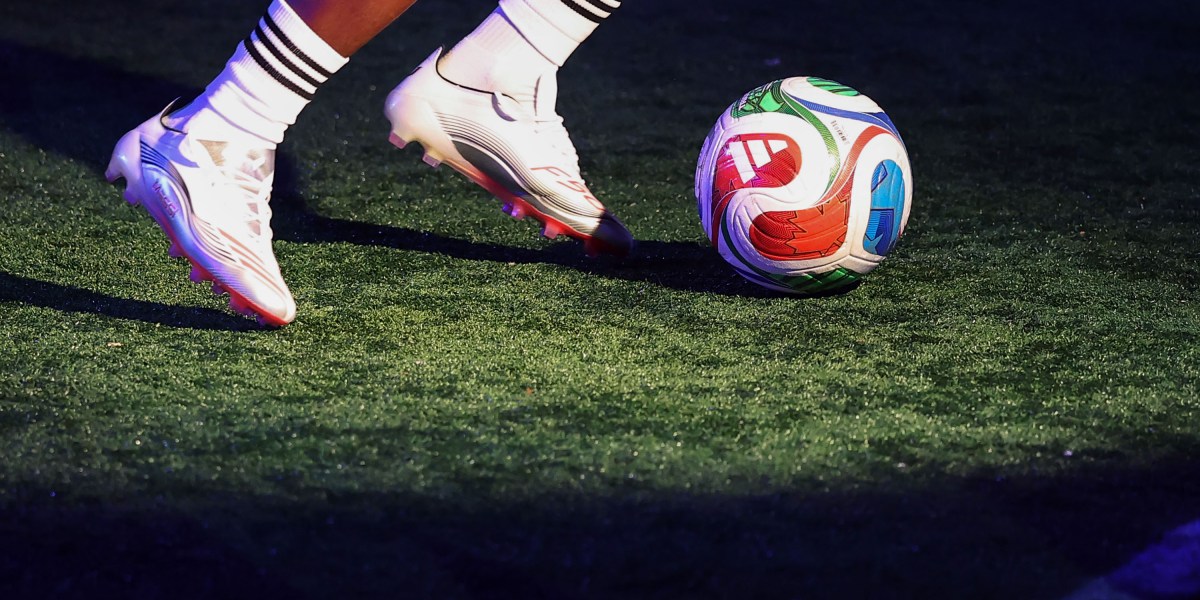
“The simple picture is that Trionda may very slightly punish extreme distance, but it should reward clean technique and predictable flight,” says team member John Eric Goff, who researches sports physics and is an incoming professor of engineering practice at Purdue University. “Goalkeepers, defenders hitting long passes, and long-range shooters are where I would look first for visible differences.”
TAKESHI ASAI, SUNGCHAN HONG, AND RICHONG LIU
Adidas has been designing new balls for each World Cup since the 1970s. Some of the design changes in the first few decades were aesthetic: The 1986 ball featured graphics inspired by Aztec temples for the Mexico tournament, and 1994’s had space graphics in honor of the moon landing’s 25th anniversary. There were some structural differences too, such as upgraded foam cores and improved water resistance. But by and large, the balls used the same design of 32 pentagonal panels stitched together.
That changed in the 2006 World Cup in Germany, when Adidas introduced the +Teamgeist ball. It featured just 14 curved panels, which were thermally bonded together rather than stitched. The design helped keep moisture out so the ball wouldn’t grow heavier throughout the game, Goff says. It was around this time that he started studying soccer balls. In the years since then, he and his colleagues have followed the transformations as Adidas has released balls with different surface textures and even fewer panels—design changes significant enough to affect game play.
In-flight motion
Goff discovered early on that by analyzing a ball’s trajectory data, he could derive its drag coefficient—a number that determines the air resistance it experiences midflight at a given speed. Shortly after, he began working with a team in Japan to analyze how the World Cup ball’s in-flight behavior changes with each new design.
The experiments, carried out at the University of Tsukuba in Japan, have been purposely consistent over the years because “maintaining continuity is important for comparing new data with historical data sets,” says Takeshi Asai, a professor there who works on the experiments. They entail attaching the ball to a metal rod connected to an instrument called a force balance, which measures aerodynamic forces such as drag and lift as the ball is exposed to the same wind speeds it would experience in a real soccer game—seven to 35 meters per second.
The team tests the ball in different orientations, “but you can only do a few because the Trionda ball is $170,” Goff says, and each new test effectively destroys it. The experiments show the team how the drag coefficient changes with speed, and Goff then writes code to simulate the ball’s overall trajectory as it flies through the air.
The team’s analysis has shown how recent World Cup balls evolved since the eight-panel Jabulani ball for the 2010 event. The Jabulani faced much criticism from players—particularly goalkeepers, who said it had a deceptive trajectory that “dipped wickedly,” as one player told the Guardian.
24World Media does not take any responsibility of the information you see on this page. The content this page contains is from independent third-party content provider. If you have any concerns regarding the content, please free to write us here: contact@24worldmedia.com