

Glucose Biosensor Market: Wearables, AI, and Continuous Glucose Monitoring Driving Innovation

The Glucose Biosensor Market is undergoing significant transformation as healthcare providers, patients, and technology companies increasingly adopt connected, wearable, and real-time glucose monitoring solutions. Glucose biosensors play an important role in detecting and monitoring glucose concentrations, particularly for diabetes management, while advances in miniaturization, wireless connectivity, wearable electronics, and artificial intelligence (AI) are expanding their capabilities.
According to MarketsandMarkets, The global biosensors market is projected to grow from USD 34.51 billion in 2025 to USD 54.37 billion by 2030, at a CAGR of 9.5% The report identifies increasing diabetes prevalence and the expanding use of glucose monitoring systems, including wearable and point-of-care devices, as important growth drivers for the broader biosensors industry.
Glucose Biosensor Market Growth Driven by Rising Diabetes Monitoring Needs
The increasing requirement for regular and convenient glucose monitoring is one of the most important factors supporting the Glucose Biosensor Market. Glucose biosensors are designed to detect glucose concentrations and convert biological interactions into measurable signals. These technologies can support conventional glucose testing as well as increasingly sophisticated continuous monitoring systems.
MarketsandMarkets identifies the increasing global incidence of diabetes as a major driver of the broader biosensors market. The growing adoption of glucose monitoring systems is creating demand for sensors capable of delivering accurate and timely glucose measurements. Lifestyle-related diseases and the need for long-term disease management are also encouraging the adoption of portable and connected monitoring technologies.
Unlike traditional testing approaches that provide measurements at individual points in time, continuous glucose monitoring (CGM) technologies are designed to provide repeated glucose measurements over an extended period. This supports greater visibility into glucose patterns and can help users and healthcare professionals monitor changes over time.
The combination of biosensing technology, wireless communication, mobile applications, and data analytics is therefore changing how glucose information can be collected and interpreted.
Wearable Technology Accelerating Glucose Biosensor Market Innovation
Wearable devices are becoming a central innovation area within the Glucose Biosensor Market. MarketsandMarkets reports that wearable biosensors are expected to grow at a higher rate than non-wearable biosensors during 2025–2030. The increasing interest in continuous health monitoring is supporting demand for compact sensors that can collect physiological information while users carry out normal daily activities.
Wearable glucose monitoring solutions can incorporate sensor patches and other compact sensing architectures. These devices can be connected to smartphones, cloud platforms, and healthcare applications, allowing glucose-related information to be accessed through digital interfaces.
The development of flexible electronics, miniaturized components, wireless connectivity, and low-power technologies is also supporting the evolution of wearable biosensors. MarketsandMarkets highlights opportunities for biosensor patches, smart textiles, and other wearable systems capable of monitoring biomarkers such as glucose.
This trend is moving the Glucose Biosensor Market beyond standalone diagnostic equipment toward integrated digital health ecosystems.
Download PDF Brochure @ https://www.marketsandmarkets.com/pdfdownloadNew.asp?id=798
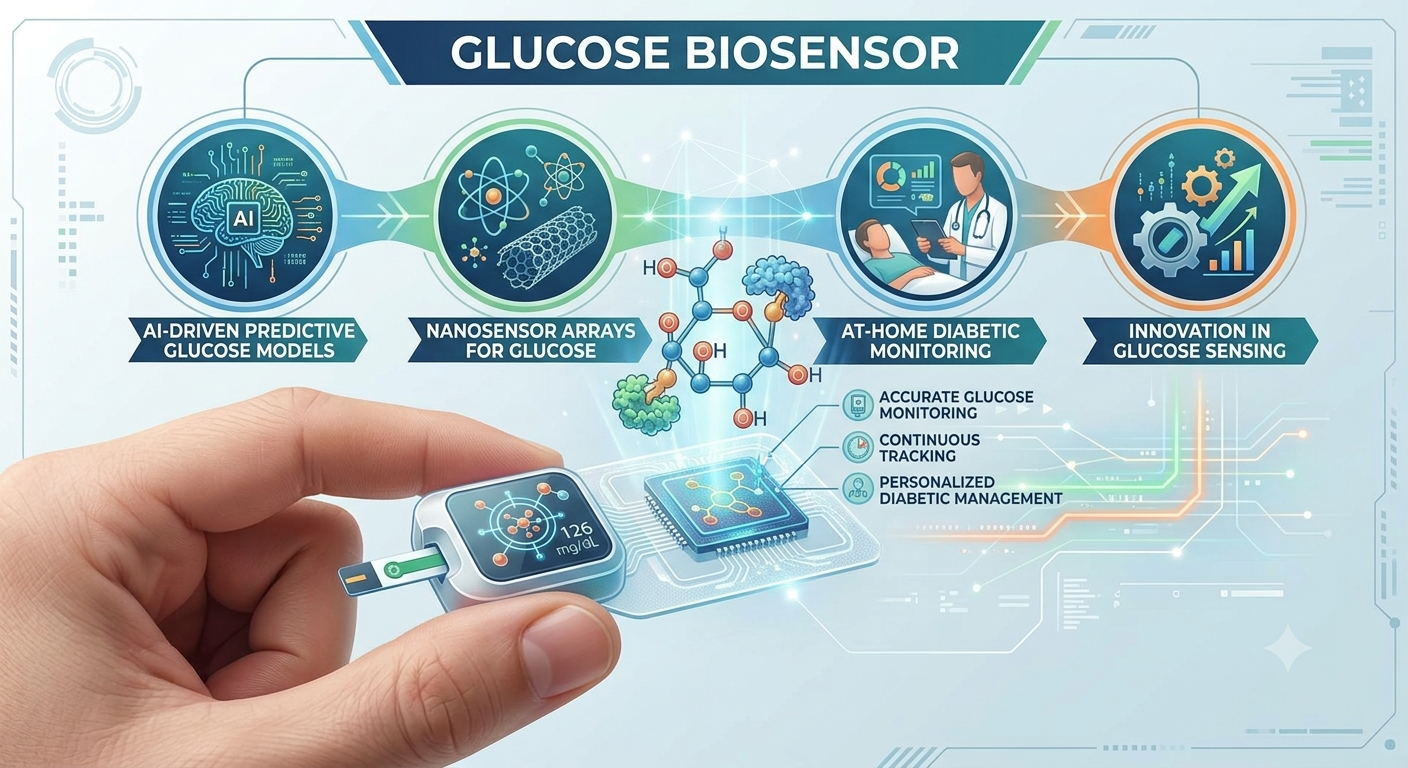
Continuous Glucose Monitoring Transforming Diabetes Management
Continuous glucose monitoring represents one of the most significant application areas for glucose biosensor innovation. CGM systems use biosensing technologies to collect glucose information repeatedly and provide users with a more continuous view of glucose levels.
The increasing emphasis on preventive healthcare and personalized disease management is creating demand for monitoring systems that generate actionable data rather than isolated measurements. Connected glucose sensors can transmit information to smartphones or other digital platforms, enabling users to track changes and identify patterns.
The integration of alerts, historical data, visualization tools, and analytics can further improve the usefulness of CGM platforms. As sensor performance and connectivity improve, manufacturers are focusing on making these technologies more convenient, smaller, and easier to integrate into everyday healthcare routines.
MarketsandMarkets specifically identifies glucose-detecting biosensors as an important part of the biosensors landscape and highlights glucose monitoring as a significant factor supporting market expansion.
AI and Data Analytics Creating Smarter Glucose Biosensors
Artificial intelligence is emerging as an important technology layer around glucose biosensor systems. While the biosensor itself performs the biological detection, AI and machine learning can be applied to the large volumes of data generated by continuous monitoring devices.
AI-enabled platforms can analyze glucose trends alongside historical measurements and other available physiological or lifestyle information. This can support pattern recognition, data visualization, personalized insights, and automated alerts.
The broader biosensors industry is increasingly integrating AI, IoT, and cloud-based platforms to enable continuous monitoring and smart diagnostics.
For the Glucose Biosensor Market, this integration creates opportunities to develop systems that move beyond measurement toward intelligent data interpretation. Connected platforms can potentially help users understand changes in glucose patterns and provide healthcare professionals with more comprehensive longitudinal information.
The growing availability of connected health data is likely to increase the importance of software, analytics, cloud infrastructure, and AI alongside physical sensing components.
Miniaturization and Non-Invasive Monitoring Supporting Market Expansion
Miniaturization is another important trend influencing the Glucose Biosensor Market. Smaller sensors can improve portability and enable integration into patches, wearable devices, and other compact healthcare systems.
MarketsandMarkets identifies miniaturization, nanotechnology, microfluidics, and new product development as key technological factors supporting the broader biosensors market.
Research into alternative sampling approaches is also creating opportunities for more convenient glucose monitoring. Wearable biosensors can potentially analyze biomarkers in sweat and other biological substances, while sensor patches can support extended monitoring.
The development of non-invasive or minimally invasive approaches remains an important technology objective because convenience can influence user acceptance and long-term adherence. However, achieving the required combination of accuracy, stability, sensitivity, reliability, and usability remains technically challenging.
Electrochemical Technology Remains Important for Glucose Detection
Technology development is central to the evolution of the Glucose Biosensor Market. The broader biosensors market includes electrochemical, optical, piezoelectric, thermal, and nanomechanical technologies.
Electrochemical sensing has particular relevance to glucose monitoring because biological reactions can be converted into electrical signals that can subsequently be processed and communicated through electronic systems.
At the same time, optical and other sensing technologies are advancing rapidly. MarketsandMarkets expects optical biosensors to register the highest CAGR among biosensor technologies during the forecast period.
The development of multiple sensing approaches is expanding the technological foundation available to manufacturers. Improvements in biorecognition elements, transducers, materials, electronics, and signal-processing technologies can contribute to greater sensor performance and broader application opportunities.
Point-of-Care and Home Diagnostics Expand Glucose Biosensor Adoption
The shift toward decentralized healthcare is creating additional opportunities for the Glucose Biosensor Market. Point-of-care and home diagnostic technologies allow users to conduct testing outside conventional laboratory environments.
MarketsandMarkets identifies home diagnostics as the fastest-growing application segment within the broader biosensors market during the forecast period. The growth is associated with healthcare developments, adoption of new diagnostic methods, and the convenience of home-based medical devices.
For glucose monitoring, home-based solutions can support regular measurement and long-term disease management. Connected devices can further link home monitoring with mobile applications and digital healthcare platforms.
This transition is also contributing to a broader shift toward decentralized and patient-centric healthcare, where individuals have greater access to health information outside traditional clinical settings.
Asia Pacific Emerging as a High-Growth Market
Regional developments will also influence the future of the Glucose Biosensor Market. MarketsandMarkets expects Asia Pacific to experience the highest growth rate in the broader biosensors market during 2025–2030. The region’s large population base and increasing incidence of lifestyle-related diseases are among the factors supporting market expansion.
Growing healthcare infrastructure, increasing adoption of digital health technologies, and expanding demand for portable diagnostic devices can create additional opportunities for biosensor manufacturers across Asia Pacific.
The region also provides opportunities for companies to develop affordable, scalable, and connected monitoring solutions designed for diverse healthcare environments. As access to smartphones, cloud platforms, and digital healthcare services expands, connected glucose monitoring could become increasingly integrated with broader healthcare ecosystems.
Key Challenges in the Glucose Biosensor Market
Despite strong technology development, the Glucose Biosensor Market faces several challenges. Sensor accuracy, biological-material stability, manufacturing costs, regulatory requirements, and long-term reliability remain important considerations.
MarketsandMarkets identifies high R&D costs, slow commercialization, and regulatory requirements as restraints or challenges affecting biosensor adoption. Medical biosensors may require extensive performance validation and regulatory approval before commercial deployment.
Biological components used in biosensors can also be affected by environmental conditions such as temperature, pH, and other factors. Maintaining stable sensing performance over the intended operating period is therefore critical.
For manufacturers, successful commercialization requires balancing sensor performance with affordability, user comfort, durability, manufacturing scalability, and regulatory compliance.
Competitive Landscape and Industry Innovation
The competitive environment surrounding glucose biosensing includes established healthcare companies, medical device manufacturers, diagnostic technology providers, and specialized biosensor companies.
MarketsandMarkets identifies Abbott Laboratories, F. Hoffmann-La Roche, Medtronic, Bio-Rad Laboratories, and DuPont among the key companies in the broader biosensors market. Its market coverage also identifies companies such as Dexcom, Masimo, Nova Biomedical, Universal Biosensors, and ACON Laboratories in the biosensors competitive landscape.
Competition is increasingly focused on sensor accuracy, miniaturization, connectivity, usability, data analytics, and integration with digital healthcare platforms. Companies are also pursuing product innovation and partnerships to expand biosensor applications.
The convergence of medical devices and consumer technology is further broadening the innovation landscape. Wearable electronics, smartphones, cloud computing, AI, and IoT technologies are increasingly interconnected with biosensing platforms.
Future Outlook for the Glucose Biosensor Market
The future of the Glucose Biosensor Market will increasingly be shaped by the convergence of sensing hardware, wearable technology, AI, connectivity, and personalized healthcare, highlighting the expanding commercial importance of biosensing technologies.
Within this broader market, glucose monitoring is positioned as an important application because of the need for continuous disease monitoring and the growing adoption of wearable healthcare technologies.
Future innovation is likely to focus on smaller and more comfortable sensors, improved accuracy, longer operating life, wireless connectivity, intelligent analytics, and increasingly personalized monitoring. AI-powered interpretation and cloud-connected platforms can further transform glucose data into actionable insights.
As healthcare moves toward continuous monitoring and decentralized care, glucose biosensors are evolving from simple diagnostic components into connected platforms that support long-term health management. This convergence of wearables, AI, and continuous glucose monitoring is expected to remain a defining force shaping innovation across the glucose biosensing ecosystem.
Frequently Asked Questions
1. What is driving the Glucose Biosensor Market?
The major growth factors include increasing diabetes prevalence, rising demand for continuous monitoring, growing adoption of wearable healthcare devices, technological advances in biosensors, and increasing demand for convenient home and point-of-care diagnostics. MarketsandMarkets specifically identifies increasing diabetes incidence and expanding glucose monitoring systems as major drivers of the broader biosensors market.
2. How are wearables influencing the Glucose Biosensor Market?
Wearable technologies enable continuous or frequent health monitoring through compact sensor patches and other wearable configurations. MarketsandMarkets expects wearable biosensors to grow at a higher rate than non-wearable biosensors from 2025 to 2030.
3. What role does AI play in glucose biosensors?
AI can analyze large volumes of glucose-monitoring data, identify patterns, support personalized insights, and enhance connected healthcare platforms. The broader biosensors market is increasingly integrating AI, IoT, and cloud-based technologies for continuous monitoring and smart diagnostics.
4. What is the size of the global biosensors market?
These figures represent the overall biosensors market and not the glucose biosensor segment alone.
5. Which region is expected to experience the highest growth in the biosensors market?
Asia Pacific is expected to experience the highest growth rate in the broader biosensors market during 2025–2030, supported by its large population base and increasing incidence of lifestyle-related diseases.
About MarketsandMarkets™
MarketsandMarkets™ is a blue ocean alternative in growth consulting and program management, leveraging a man-machine offering to drive supernormal growth for progressive organizations in the B2B space. We have the widest lens on emerging technologies, making us proficient in co-creating supernormal growth for clients.
The B2B economy is witnessing the emergence of $25 trillion of new revenue streams that are substituting existing revenue streams in this decade alone. We work with clients on growth programs, helping them monetize this $25 trillion opportunity through our service lines – TAM Expansion, Go-to-Market (GTM) Strategy to Execution, Market Share Gain, Account Enablement, and Thought Leadership Marketing.
Built on the ’GIVE Growth’ principle, we work with several Forbes Global 2000 B2B companies – helping them stay relevant in a disruptive ecosystem. Our insights and strategies are molded by our industry experts, cutting-edge AI-powered Market Intelligence Cloud, and years of research. The KnowledgeStore™ (our Market Intelligence Cloud) integrates our research, facilitates an analysis of interconnections through a set of applications, helping clients look at the entire ecosystem and understand the revenue shifts happening in their industry.
To find out more, visit www.MarketsandMarkets™.com or follow us on Twitter, LinkedIn and Facebook.
Contact:
Mr. Rohan Salgarkar
MarketsandMarkets™ INC.
630 Dundee Road
Suite 430
Northbrook, IL 60062
USA : 1-888-600-6441
24World Media does not take any responsibility of the information you see on this page. The content this page contains is from independent third-party content provider. If you have any concerns regarding the content, please free to write us here: contact@24worldmedia.com