

Desalination technology, by the numbers
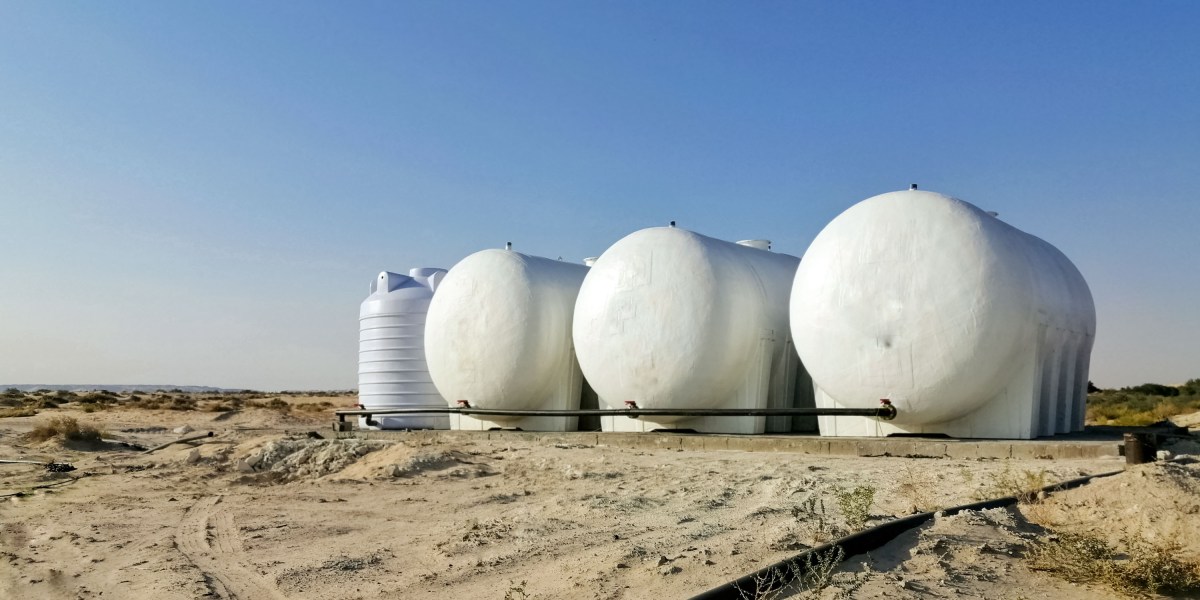
For more on how this crucial water infrastructure is increasingly vulnerable during the war in Iran, check out my latest story. Here, though, let’s look at the state of desalination technology, by the numbers.
Desalination produces 77% of all fresh water and 99% of drinking water in Qatar.
Globally, we rely on desalination for just 1% of fresh-water withdrawals. But for some countries in the Middle East, and particularly for the Gulf Cooperation Council countries (Bahrain, Qatar, Kuwait, the United Arab Emirates, Saudi Arabia, and Oman), it’s crucial.
Qatar, home to over 3 million people, is one of the most staggering examples, with nearly all its drinking water supplies coming from desalination. But many major cities in the region couldn’t exist without the technology. There are no permanent rivers on the Arabian Peninsula, and supplies of fresh water are incredibly limited, so countries rely on facilities that can take in seawater and pull out the salt and other impurities.
The Middle East is home to just 6% of the world’s population and over 27% of its desalination facilities.
The region has historically been water-scarce, and that trend is only continuing as climate change pushes temperatures higher and changes rainfall patterns.
Of the 17,910 desalination facilities that are operational globally, 4,897 are located in the Middle East, according to a 2026 study in npj Clean Water. The technology supplies not only municipal water used by homes and businesses, but also industries including agriculture, manufacturing, and increasingly data centers.
One massive desalination plant in Saudi Arabia produces over 1 million cubic meters of fresh water per day.
The Ras Al-Khair water and power plant in Eastern Province, Saudi Arabia, is one of a growing number of gigantic plants that output upwards of a million cubic meters of water each day. That amount of water can meet the needs of millions of people in Riyadh City. Producing it takes a lot of power—the attached power plant has a capacity of 2.4 gigawatts.
While this plant is just one of thousands across the region, it’s an example of a growing trend: The average size of a desalination plant is about 10 times what it was 15 years ago, according to data from the International Energy Agency. Communities are increasingly turning to larger plants, which can produce water more efficiently than smaller ones.
Between 2024 and 2028, the Middle East’s desalination capacity could grow by over 40%.
Desalination is only going to be more crucial for life in the Middle East. The region is expected to spend over $25 billion on capital expenses for desalination facilities between 2024 and 2028, according to the 2026 npj Clean Water study. More massive plants are expected to come online in Saudi Arabia, Iraq, and Egypt during that time.
All this growth could consume a lot of electricity. Between growth of the technology generally and the move toward plants that use electricity rather than fossil fuels, desalination could add 190 terawatt-hours of electricity demand globally by 2035, according to IEA data. That’s the equivalent of about 60 million households.
This article is from The Spark, MIT Technology Review’s weekly climate newsletter. To receive it in your inbox every Wednesday, sign up here.
24World Media does not take any responsibility of the information you see on this page. The content this page contains is from independent third-party content provider. If you have any concerns regarding the content, please free to write us here: contact@24worldmedia.com